

Your Willpower Isn't The Problem...

You may have noticed a common theme here on my Substack.
I criticize myself.
A lot!
Every day I set standards that are too high and then spiral when I fail to hit them.
I didn’t complete all the items on my to do list.
Or I didn’t write 5 pages of the book I’m working on.
Or I didn’t push myself to failure at the gym.
And in my mind, the problem is always me.
I didn’t work hard enough. Or I was too distracted. Or I’m simply not good enough to hit my goals.
But there’s a critical element we often overlook.
When it comes to our self-discipline. And energy. And creativity.
We only have so much gas in our tanks...

I’m a huge Stephen King fan. Though I’m a light reader, I’ve consumed a lot of King’s books. And what an amazing body of work. Carrie. The Shining. Misery. IT. King has created some of the most iconic stories of our times.
He’s also incredibly prolific, writing over 67 novels and 200 short stories over the course of his career. Even in his late 70’s, King generally publishes a book a year.
And King’s novels are not short. Most are over 500 pages. And several top out at 1,000 pages plus!
So you’d assume that Stephen King does nothing but write all day long.
I did.
Wrong.
King actually only writes for 3-4 hours each day, aiming for around 1,000 words at a time. In his younger days when he was a faster writer he would try and hit a 2,000-word target.
And Stephen King isn’t alone.
When you look at the schedules of most famous writers, virtually none of them are putting in 10 hour writing days.
And it’s not just writing. The same applies to most other fields.
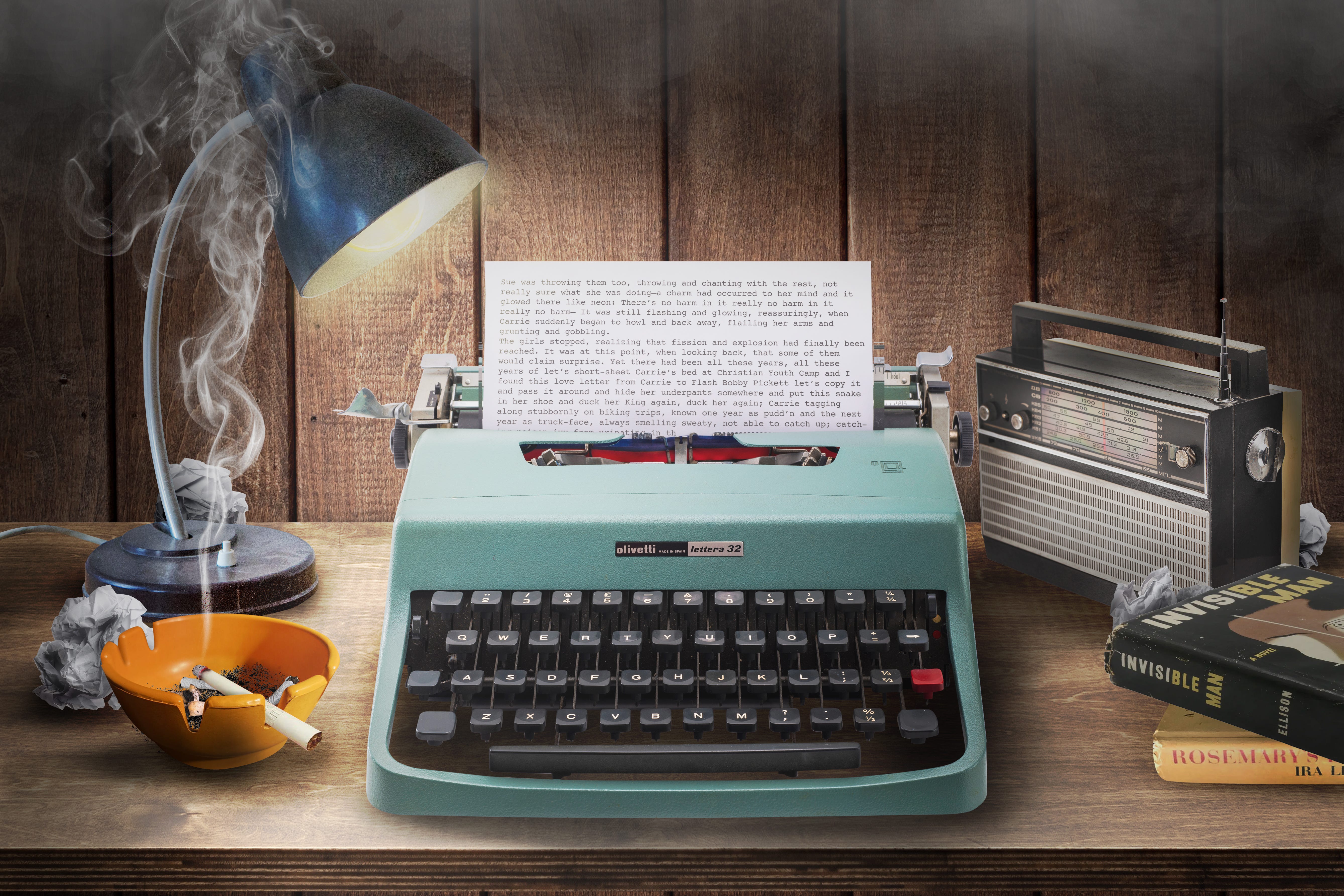
I’ve always been fascinated by how people manage their time, and years ago looked up a book on this very topic - Daily Rituals by Mason Currey (who incidentally, has his own Substack page if you’d like to check him out!)
In the book, Currey analyzes the rituals of over 150 writers, painters, scientists and philosophers to chart how they manage their time – and schedule. The book includes a wide range of famous figures – Agatha Christie, Charles Dickens, Pablo Picasso, Woody Allen, and so on.
It’s a fascinating idea and the book is well worth a read if you share my obsession!
But what struck me most is how limited the time is that people spend on their respective fields.
Like Stephen King, few of these subjects are putting in the 10, or 12, or 16-hour days that social media has convinced us we need to work.
And there’s very good reason for this.
Because you only have so much in your tank every day.
One of my biggest aha moments of the last few years is that when it comes to your creativity, you only get a limited supply each day.
It might be 3-4 hours. It might be 6 or 7. But once that gas runs out, you’re running on fumes. And anything you produce after this point is going to be of diminishing returns.
Now can you write longer? Or paint longer? Or make music longer? For sure.
But will it be your best work? Probably not. So you’re better off focusing your attention on a less creative task and working your mind in a different way.
That’s the bad news. The good news is that your creative tank refills each day.
But for years, I used to beat myself up over the fact that I wasn’t creating for hour after hour – not understanding that I was fighting a losing battle with my brain – and biology.
And it’s not just creativity of course.
You get a finite amount of willpower each day.
And discipline.
And it runs out as the day progresses as it’s ‘used up’ on other tasks.
We understand this concept when it comes to our physical bodies. If we go for a long run in the morning we know we’ll have less energy in the afternoon.
But when it comes to our minds, we don’t give ourselves any grace.
Why am I finding it hard to focus? Why don’t I have the motivation to finish this task? Why are my creative juices not flowing?
Because each of your respective tanks are empty.

You may have heard of the famous chocolate and radishes experiment.
In 1996, social psychologist Roy Baumeister conducted a test whereby participants were placed in a room with two bowls – a bowl of radishes and a bowl of freshly baked cookies.
One group was allowed to eat the cookies freely, while the second group had to resist the cookie – and only eat the radishes.
Both groups were then given an impossible geometric puzzle to solve. But how long would each group stick with the task?
Turns out, the group that ate the cookies worked on the puzzle for around 20 minutes before giving up. But the radishes group only managed 8 minutes of puzzle solving time.
They’d used up their supply of willpower and discipline.
Ever since I learned this critical lesson I’ve lightened up on myself.
I’ve also learned to design my day around my tanks. I take advantage of my peak productivity time - I’m writing this piece at 7am for this very reason – and tackle tasks that require little concentration during my energy ebbs.
I schedule my workouts to give me a late afternoon energy boost. I stop when I know I’m running on fumes. And I recognize the difference between deep focus and light creative work (brainstorming titles is a much lighter lift than locked-in writing)
You may not be engaged in creative work – but I’m sure you have plenty on your own plates. And like me, you may have fallen into the trap of thinking you can just be go, go, go all the time.
But once you realize the idea of an empty tank, it changes everything.
You begin to understand that you can only produce and perform so much on any given day.
And that’s not a personal failing. It’s just the way we’re built.
So stop trying to drive when you’re all out of gas.
Because you’re just running on empty.
And making yourself miserable.
Thanks for reading. If you like my posts and want to support my writing please consider leaving a tip. All my content is currently free and your tips make a huge difference…
Thanks for the shout-out, Rich — totally agree on this, and glad my book helped you think it through.
I find stepping away from the machine, but still thinking about what you want to write away from the dominance of the screen is a good way to stay connected to work without putting yourself in a pressure cooker.